
Welcome to the Cnidaria subsite on Invertebrate Paleontology!
Please enter a genera name to retrieve more information.

Duplophyllum
Classification
Phylum:
Cnidaria
Class:
Anthozoa
Subclass:
Rugosa
Order:
Stauriida
Suborder:
Stereolasmatina
Family:
Hapsiphyllidae
Subfamily:
Hapsiphyllinae
Formal Genus Name and Reference:
Duplophyllum KOKER, 1924, p. 21
Type Species:
D. zaphrentoides KOKER, 1924, p. 21; M, see CHI, 1938, p. 164, LANG, SMITH, & THOMAS, 1940, p. 55; tnot traced in TH, Delft (orig. of KOKER, pI. 8, fig. 2a); lectotype by SCHOUPP£' & STACUL, 1959, p. 242
Images
(Click to enlarge in a new window)
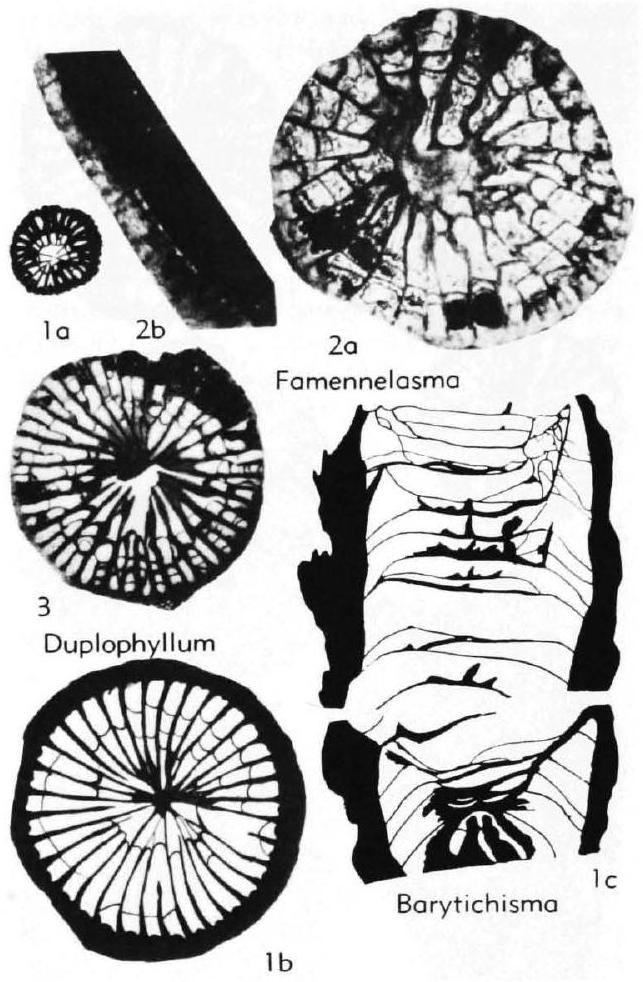 Fig. 206,3. *D. zaphrentoides KOKER, lectotype, Timor, Basleo; transv. sec., ?enl. (Koker, 1924).
Synonyms
Geographic Distribution
Asia(Timor)
Age Range
Beginning Stage in Treatise Usage:
U.Perm.
Beginning International Stage:
Wuchiapingian
Fraction Up In Beginning Stage:
0
Beginning Date:
259.55
Ending Stage in Treatise Usage:
U.Perm.
Ending International Stage:
Changhsingian
Fraction Up In Ending Stage:
100
Ending Date:
251.9
Description
Solitary, cardinal side commonly convex, less commonly concave; septa of quadrants arranged pinnately to shallow cardinal and alar fossulae, Iheir axial ends in late stages may withdraw somewhat to leave open fossula, and cardinal sepIum may shorten markedly; thickness of major sepIa variable, may be marked; minor septa variable, may be long, thin, and either contra- tingent, contraclined, or contrajunct, Km longest; tabulae declined abaxially.
References
Museum or Author Information
Classification
Phylum:
Cnidaria
Class:
Anthozoa
Subclass:
Rugosa
Order:
Stauriida
Suborder:
Stereolasmatina
Family:
Hapsiphyllidae
Subfamily:
Hapsiphyllinae
Formal Genus Name and Reference:
Duplophyllum KOKER, 1924, p. 21
Type Species:
D. zaphrentoides KOKER, 1924, p. 21; M, see CHI, 1938, p. 164, LANG, SMITH, & THOMAS, 1940, p. 55; tnot traced in TH, Delft (orig. of KOKER, pI. 8, fig. 2a); lectotype by SCHOUPP£' & STACUL, 1959, p. 242
Images
(Click to enlarge in a new window)
Fig. 206,3. *D. zaphrentoides KOKER, lectotype, Timor, Basleo; transv. sec., ?enl. (Koker, 1924).
Synonyms
Geographic Distribution
Asia(Timor)
Age Range
Beginning Stage in Treatise Usage:
U.Perm.
Beginning International Stage:
Wuchiapingian
Fraction Up In Beginning Stage:
0
Beginning Date:
259.55
Ending Stage in Treatise Usage:
U.Perm.
Ending International Stage:
Changhsingian
Fraction Up In Ending Stage:
100
Ending Date:
251.9
Description
Solitary, cardinal side commonly convex, less commonly concave; septa of quadrants arranged pinnately to shallow cardinal and alar fossulae, Iheir axial ends in late stages may withdraw somewhat to leave open fossula, and cardinal sepIum may shorten markedly; thickness of major sepIa variable, may be marked; minor septa variable, may be long, thin, and either contra- tingent, contraclined, or contrajunct, Km longest; tabulae declined abaxially.