
Welcome to the Cnidaria subsite on Invertebrate Paleontology!
Please enter a genera name to retrieve more information.

Neokoninckophyllum
Classification
Phylum:
Cnidaria
Class:
Anthozoa
Subclass:
Rugosa
Order:
Stauriida
Suborder:
Aulophyllina
Family:
Aulophyllidae
Subfamily:
Dibunophyllinae
Formal Genus Name and Reference:
Neokoninckophyllum FOMICHEV, 1939, p. 58
Type Species:
N. tanaicum; SD LANG, SMITH, & THOMAS, 1940, p. 88; +310, coIl. 5030, TsGM, Leningrad
Images
(Click to enlarge in a new window)
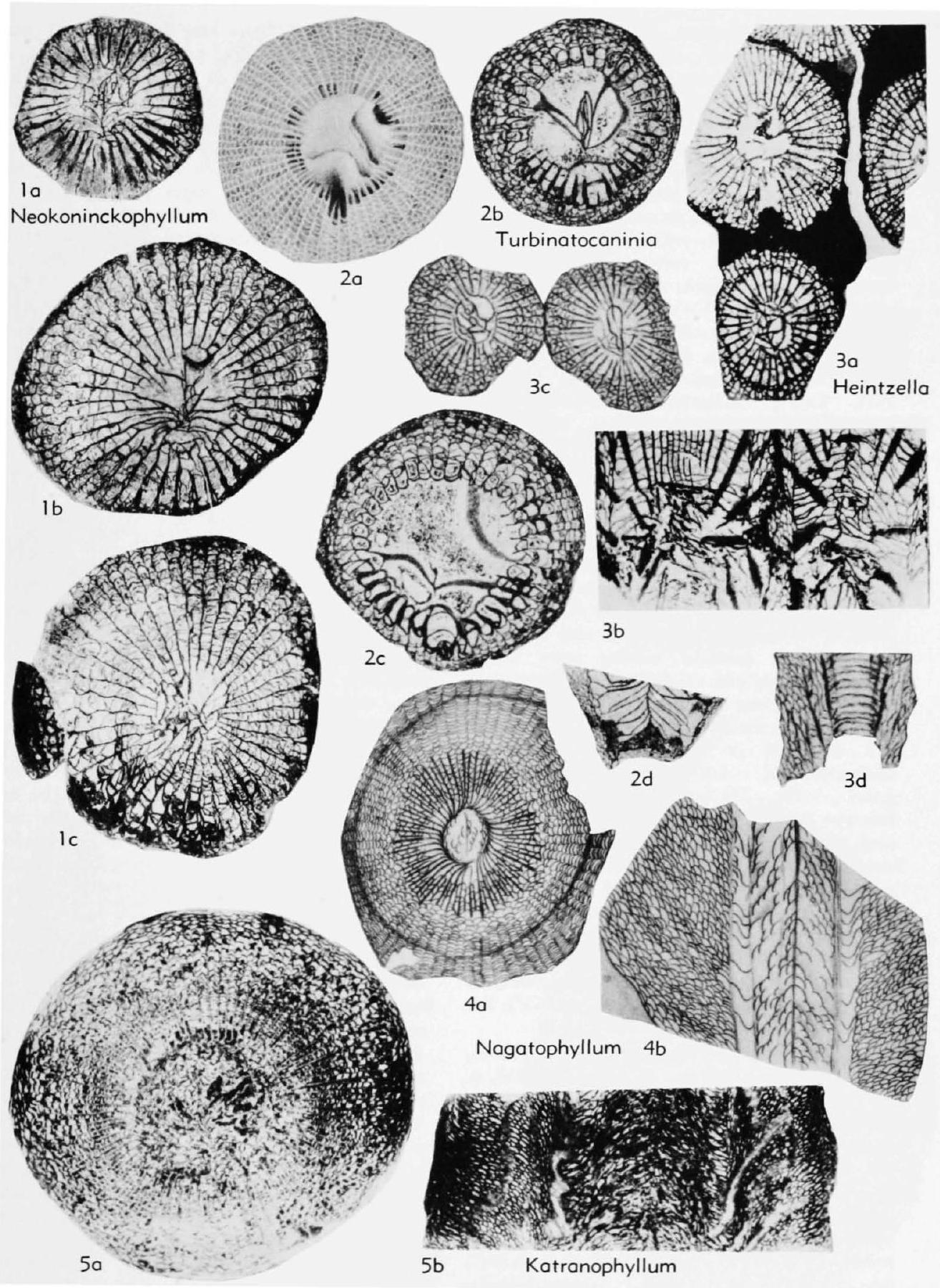 Fig. 241,la-c. *N. tanaicum, holotype, Is. M5, Donbas, Churilina ravine; a-c, transv. sees., all X1.3 (Fomichev, 1953a).
Synonyms
Geographic Distribution
Eu.(Pol.), U.Carb., Eu.(Donbas)-Asia (?Japan); Penn., N. Am. (Okla.-Texas-Kans.-?Ariz.
Age Range
Beginning Stage in Treatise Usage:
L.Carb.(Visean)
Beginning International Stage:
Visean
Fraction Up In Beginning Stage:
0
Beginning Date:
346.73
Ending Stage in Treatise Usage:
L.Carb.(Visean)
Ending International Stage:
Visean
Fraction Up In Ending Stage:
100
Ending Date:
330.34
Description
Solitary, conical, large, may have few offsets, in early stages septa somewhat thickened, fossula indistinct, and thin median plate connected with both cardinal and counter septa, other major septa not reaching axis, and narrow dissepimentarium, in later stages thickening disappears first in counter quadrants, dissepimentarium widens and develops anguloconcentric structure as minor septa withdraw to periphery, septa may bear lateral dissepiments, cardinal septum shortens slightly, a thin, weak, platy columella is either retained, now separate and commonly somewhat displaced to side of cardinal septum, with few sparse impersistent septal lamellae, or absent, tabular floors broad cones drawn up sharply at columella
References
Museum or Author Information
Classification
Phylum:
Cnidaria
Class:
Anthozoa
Subclass:
Rugosa
Order:
Stauriida
Suborder:
Aulophyllina
Family:
Aulophyllidae
Subfamily:
Dibunophyllinae
Formal Genus Name and Reference:
Neokoninckophyllum FOMICHEV, 1939, p. 58
Type Species:
N. tanaicum; SD LANG, SMITH, & THOMAS, 1940, p. 88; +310, coIl. 5030, TsGM, Leningrad
Images
(Click to enlarge in a new window)
Fig. 241,la-c. *N. tanaicum, holotype, Is. M5, Donbas, Churilina ravine; a-c, transv. sees., all X1.3 (Fomichev, 1953a).
Synonyms
Geographic Distribution
Eu.(Pol.), U.Carb., Eu.(Donbas)-Asia (?Japan); Penn., N. Am. (Okla.-Texas-Kans.-?Ariz.
Age Range
Beginning Stage in Treatise Usage:
L.Carb.(Visean)
Beginning International Stage:
Visean
Fraction Up In Beginning Stage:
0
Beginning Date:
346.73
Ending Stage in Treatise Usage:
L.Carb.(Visean)
Ending International Stage:
Visean
Fraction Up In Ending Stage:
100
Ending Date:
330.34
Description
Solitary, conical, large, may have few offsets, in early stages septa somewhat thickened, fossula indistinct, and thin median plate connected with both cardinal and counter septa, other major septa not reaching axis, and narrow dissepimentarium, in later stages thickening disappears first in counter quadrants, dissepimentarium widens and develops anguloconcentric structure as minor septa withdraw to periphery, septa may bear lateral dissepiments, cardinal septum shortens slightly, a thin, weak, platy columella is either retained, now separate and commonly somewhat displaced to side of cardinal septum, with few sparse impersistent septal lamellae, or absent, tabular floors broad cones drawn up sharply at columella