
Welcome to the Cnidaria subsite on Invertebrate Paleontology!
Please enter a genera name to retrieve more information.

Reimanophyllum
Classification
Phylum:
Cnidaria
Class:
Anthozoa
Subclass:
Rugosa
Order:
Stauriida
Suborder:
Lykophyllina
Family:
Lykophyllidae
Formal Genus Name and Reference:
Reimanophyllum LAVRUSEVICH, 1971b, p. 84
Type Species:
R. reimani, OD, †203/12, ?UpG, Dushanbe
Images
(Click to enlarge in a new window)
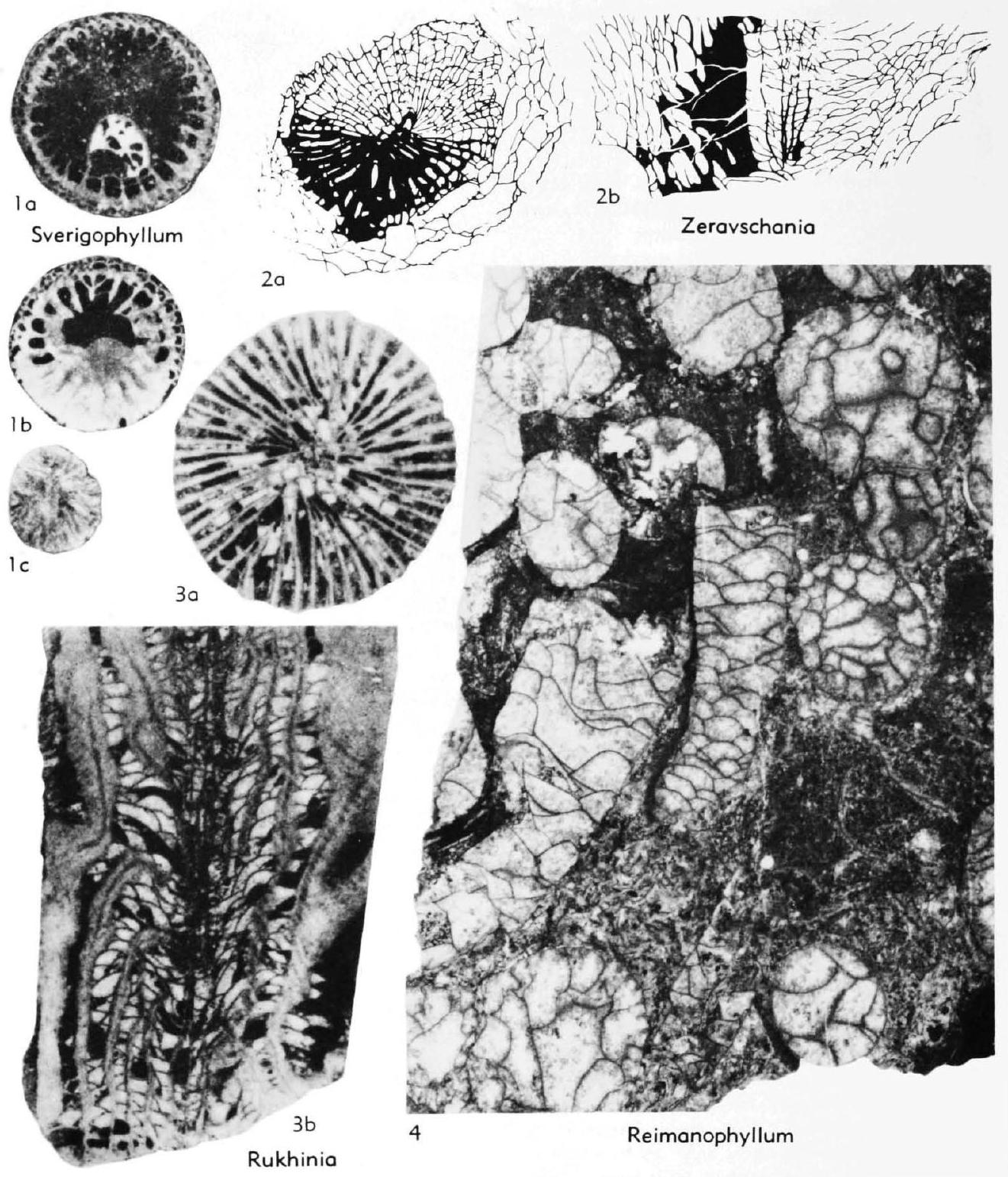 Fig. 163,4. *R. reimani, holotype, up. Argian subsuite, beds with Chavsakia chavsakiensis, Turk-parida gully, Zeravshan-Gissar Ra., transv., long. secs., X3 (Lavrusevich, 1971b).
Synonyms
Geographic Distribution
Asia(Tadzhik.)
Age Range
Beginning Stage in Treatise Usage:
L.Dev.(Gedinn.)
Beginning International Stage:
Lochkovian
Fraction Up In Beginning Stage:
0
Beginning Date:
419
Ending Stage in Treatise Usage:
L.Dev.(Gedinn.)
Ending International Stage:
Lochkovian
Fraction Up In Ending Stage:
100
Ending Date:
412.4
Description
Phaceloid, increase peripheral and nonparricidal, septa short, tabulae wide, basin-shaped, complete or incomplete, dissepiments in single series of plates flat peripherally and declined into tabularium
References
Museum or Author Information
Classification
Phylum:
Cnidaria
Class:
Anthozoa
Subclass:
Rugosa
Order:
Stauriida
Suborder:
Lykophyllina
Family:
Lykophyllidae
Formal Genus Name and Reference:
Reimanophyllum LAVRUSEVICH, 1971b, p. 84
Type Species:
R. reimani, OD, †203/12, ?UpG, Dushanbe
Images
(Click to enlarge in a new window)
Fig. 163,4. *R. reimani, holotype, up. Argian subsuite, beds with Chavsakia chavsakiensis, Turk-parida gully, Zeravshan-Gissar Ra., transv., long. secs., X3 (Lavrusevich, 1971b).
Synonyms
Geographic Distribution
Asia(Tadzhik.)
Age Range
Beginning Stage in Treatise Usage:
L.Dev.(Gedinn.)
Beginning International Stage:
Lochkovian
Fraction Up In Beginning Stage:
0
Beginning Date:
419
Ending Stage in Treatise Usage:
L.Dev.(Gedinn.)
Ending International Stage:
Lochkovian
Fraction Up In Ending Stage:
100
Ending Date:
412.4
Description
Phaceloid, increase peripheral and nonparricidal, septa short, tabulae wide, basin-shaped, complete or incomplete, dissepiments in single series of plates flat peripherally and declined into tabularium