
Welcome to the Cnidaria subsite on Invertebrate Paleontology!
Please enter a genera name to retrieve more information.

Syringaxon
Classification
Phylum:
Cnidaria
Class:
Anthozoa
Subclass:
Rugosa
Order:
Stauriida
Suborder:
Metriophyllina
Family:
Laccophyllidae
Subfamily:
Laccophyllinae
Formal Genus Name and Reference:
Syringaxon LINDSTRÖM, 1882b, p. 20
Type Species:
Cyathaxonia siluriensis MCCOY, 1850, p. 281, M, †A5468, SM, Cambridge
Images
(Click to enlarge in a new window)
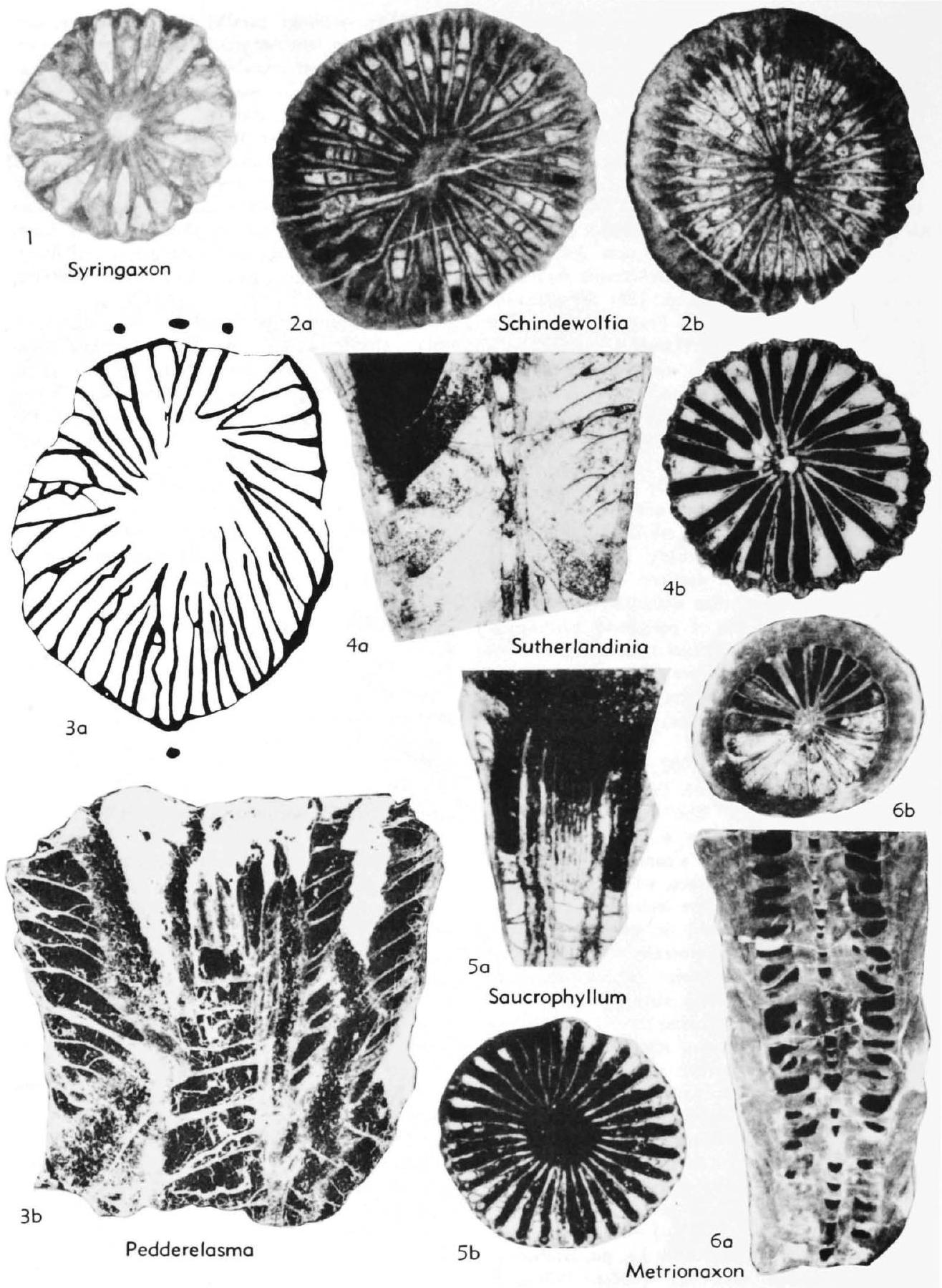 Fig. 117,1. *S. siluriensis (McCov), holotype, Ludlov., Westmoreland, transv. sec., X8 (Sutherland, 1970)
Synonyms
Laccophyllum , ?Barrandeophyllum, ?Schindewolfia , ?Saucrophyllum, ?Sutherlandinia, ?Neosyringaxon
Geographic Distribution
Eu.(Eng.), sensu lato Sil.-Dev., Eu.-Asia-N. Am.-S. Am.-Australia
Age Range
Beginning Stage in Treatise Usage:
U.Sil.
Beginning International Stage:
Gorstian
Fraction Up In Beginning Stage:
0
Beginning Date:
426.74
Ending Stage in Treatise Usage:
U.Sil.
Ending International Stage:
Pridoli
Fraction Up In Ending Stage:
100
Ending Date:
419
Description
Small, solitary, ceratoid, with aulos formed dominantly by thickening to contiguity of somewhat rhopaloid and withdrawn axial ends of major septa, minor septa contratingent, and tabularium biform, periaular tabellae except within contratingencies convex adaxially, indicating declination from axis to wall [within contratingencies only one section of tabella noted, concave adaxially, indicating declination abaxially, Weyer, 1972c, p. 461, suggests that peripheral ends of counter and $K m$ septa may be 'split']. [See HILL & JELL, 1970b, p. 17; SUTHERLAND, 1970, p. 1126. SUTHERLAND showed that the holotype of S. siluriensis had been twice buried, eroded, and transported before final fossilization, so that unambiguous morphological reconstruction is hardly possible.]
References
Museum or Author Information
Classification
Phylum:
Cnidaria
Class:
Anthozoa
Subclass:
Rugosa
Order:
Stauriida
Suborder:
Metriophyllina
Family:
Laccophyllidae
Subfamily:
Laccophyllinae
Formal Genus Name and Reference:
Syringaxon LINDSTRÖM, 1882b, p. 20
Type Species:
Cyathaxonia siluriensis MCCOY, 1850, p. 281, M, †A5468, SM, Cambridge
Images
(Click to enlarge in a new window)
Fig. 117,1. *S. siluriensis (McCov), holotype, Ludlov., Westmoreland, transv. sec., X8 (Sutherland, 1970)
Synonyms
Laccophyllum , ?Barrandeophyllum, ?Schindewolfia , ?Saucrophyllum, ?Sutherlandinia, ?Neosyringaxon
Geographic Distribution
Eu.(Eng.), sensu lato Sil.-Dev., Eu.-Asia-N. Am.-S. Am.-Australia
Age Range
Beginning Stage in Treatise Usage:
U.Sil.
Beginning International Stage:
Gorstian
Fraction Up In Beginning Stage:
0
Beginning Date:
426.74
Ending Stage in Treatise Usage:
U.Sil.
Ending International Stage:
Pridoli
Fraction Up In Ending Stage:
100
Ending Date:
419
Description
Small, solitary, ceratoid, with aulos formed dominantly by thickening to contiguity of somewhat rhopaloid and withdrawn axial ends of major septa, minor septa contratingent, and tabularium biform, periaular tabellae except within contratingencies convex adaxially, indicating declination from axis to wall [within contratingencies only one section of tabella noted, concave adaxially, indicating declination abaxially, Weyer, 1972c, p. 461, suggests that peripheral ends of counter and $K m$ septa may be 'split']. [See HILL & JELL, 1970b, p. 17; SUTHERLAND, 1970, p. 1126. SUTHERLAND showed that the holotype of S. siluriensis had been twice buried, eroded, and transported before final fossilization, so that unambiguous morphological reconstruction is hardly possible.]