
Welcome to the Cnidaria subsite on Invertebrate Paleontology!
Please enter a genera name to retrieve more information.

Timorphyllum
Classification
Phylum:
Cnidaria
Class:
Anthozoa
Subclass:
Rugosa
Order:
Stauriida
Suborder:
Plerophyllina
Family:
Timorphyllidae
Formal Genus Name and Reference:
Timorphyllum GERTH, 1921, p. 69
Type Species:
T. wanneri; M; +16-18, WANNER Coli., IP, Bonn; lectotype by
SCHOUPPE & STACUL, 1955, p. 153
Images
(Click to enlarge in a new window)
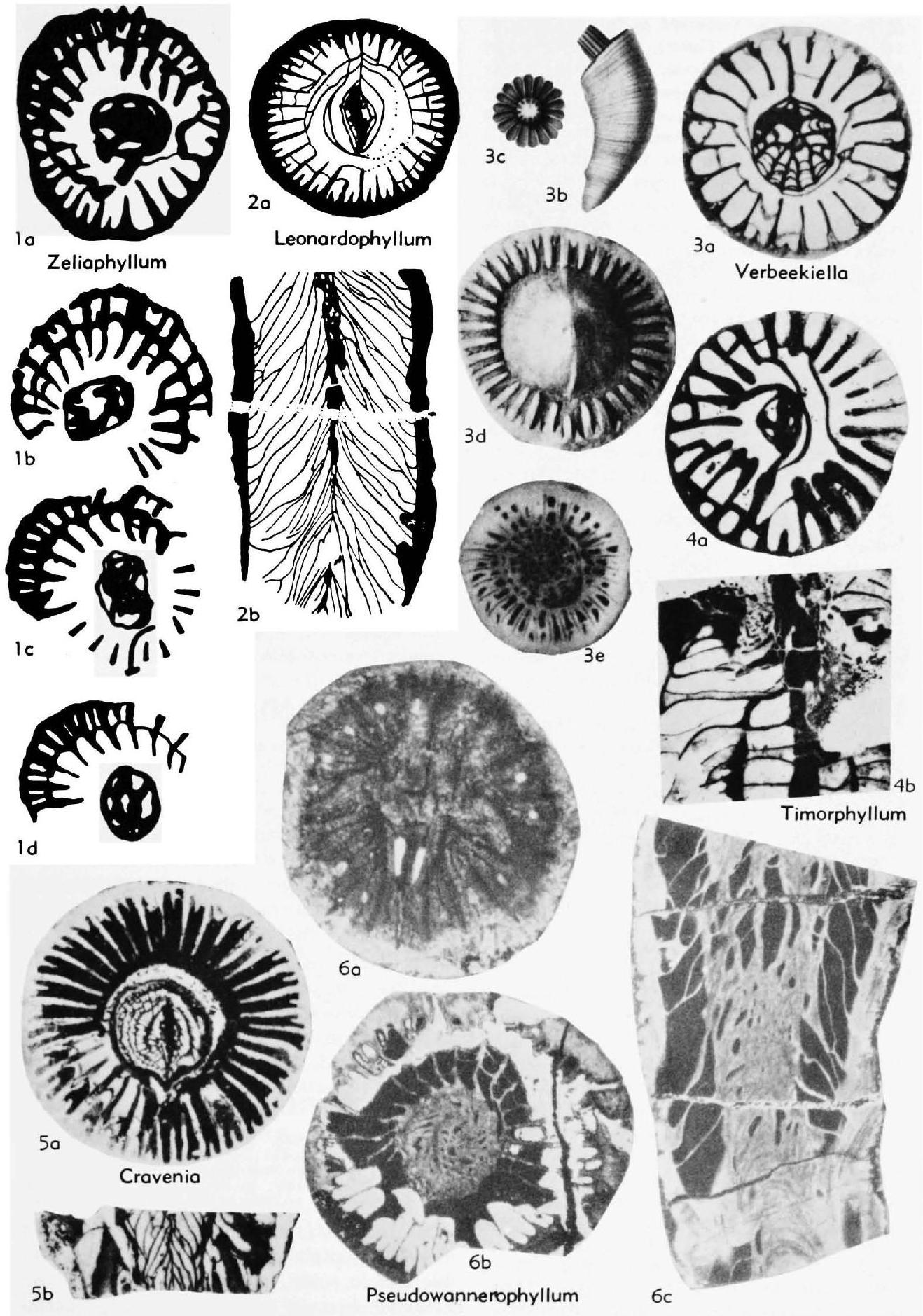 Fig. 221,4a,b. *T. wanneri, Timor, transv., long. secs., X2 (Schouppé& Stacul, 1955).
Synonyms
Geographic Distribution
Asia(Timor-China), N.Am.(Texas)
Age Range
Beginning Stage in Treatise Usage:
U.Perm.
Beginning International Stage:
Wuchiapingian
Fraction Up In Beginning Stage:
0
Beginning Date:
259.55
Ending Stage in Treatise Usage:
U.Perm.
Ending International Stage:
Changhsingian
Fraction Up In Ending Stage:
100
Ending Date:
251.9
Description
Solitary, somewhat scolecoid, epitheca almost smooth, with relatively simple axial structure, comprising lathlike columella commonly separated from septa in late stages and buttressed by sharply upturned axial parts of tabulae, a very few radial septal lamellae may appear in some, cardinal septum short, even in earliest known stage, counter septum may remain long but other septa withdraw from axis, septal insertion accelerated in counter quadrants, wall very thin, minor septa represented only by epithecal grooves or rudimentary, tabulae commonly complete, flat, with downturned edges and updrawn axial parts, septa thickened in early stages, septal trabeculae very fine, close, arranged fanwise, normal to more or less convex distal edges of septa. [see FEDOROWSKI, 1974a, p. 470].
References
Museum or Author Information
Classification
Phylum:
Cnidaria
Class:
Anthozoa
Subclass:
Rugosa
Order:
Stauriida
Suborder:
Plerophyllina
Family:
Timorphyllidae
Formal Genus Name and Reference:
Timorphyllum GERTH, 1921, p. 69
Type Species:
T. wanneri; M; +16-18, WANNER Coli., IP, Bonn; lectotype by
SCHOUPPE & STACUL, 1955, p. 153
Images
(Click to enlarge in a new window)
Fig. 221,4a,b. *T. wanneri, Timor, transv., long. secs., X2 (Schouppé& Stacul, 1955).
Synonyms
Geographic Distribution
Asia(Timor-China), N.Am.(Texas)
Age Range
Beginning Stage in Treatise Usage:
U.Perm.
Beginning International Stage:
Wuchiapingian
Fraction Up In Beginning Stage:
0
Beginning Date:
259.55
Ending Stage in Treatise Usage:
U.Perm.
Ending International Stage:
Changhsingian
Fraction Up In Ending Stage:
100
Ending Date:
251.9
Description
Solitary, somewhat scolecoid, epitheca almost smooth, with relatively simple axial structure, comprising lathlike columella commonly separated from septa in late stages and buttressed by sharply upturned axial parts of tabulae, a very few radial septal lamellae may appear in some, cardinal septum short, even in earliest known stage, counter septum may remain long but other septa withdraw from axis, septal insertion accelerated in counter quadrants, wall very thin, minor septa represented only by epithecal grooves or rudimentary, tabulae commonly complete, flat, with downturned edges and updrawn axial parts, septa thickened in early stages, septal trabeculae very fine, close, arranged fanwise, normal to more or less convex distal edges of septa. [see FEDOROWSKI, 1974a, p. 470].