
Welcome to the Cnidaria subsite on Invertebrate Paleontology!
Please enter a genera name to retrieve more information.
Triplophyllum
Classification
Phylum:
Cnidaria
Class:
Anthozoa
Subclass:
Rugosa
Order:
Stauriida
Suborder:
Streptelasmatina
Family:
Streptelasmatidae
Subfamily:
Streptelasmatinae
Formal Genus Name and Reference:
Triplophyllum SIMPSON, 1900, p. 209
Type Species:
Zaphrentis terebrata Hall, 1883, p. 316, OD, †3841 / 1 (=341), NYSM, Albany (original Hall, 1883, pl. 23, fig. 5), lectotype by SIMPSON, 1900, p. 209
Images
(Click to enlarge in a new window)
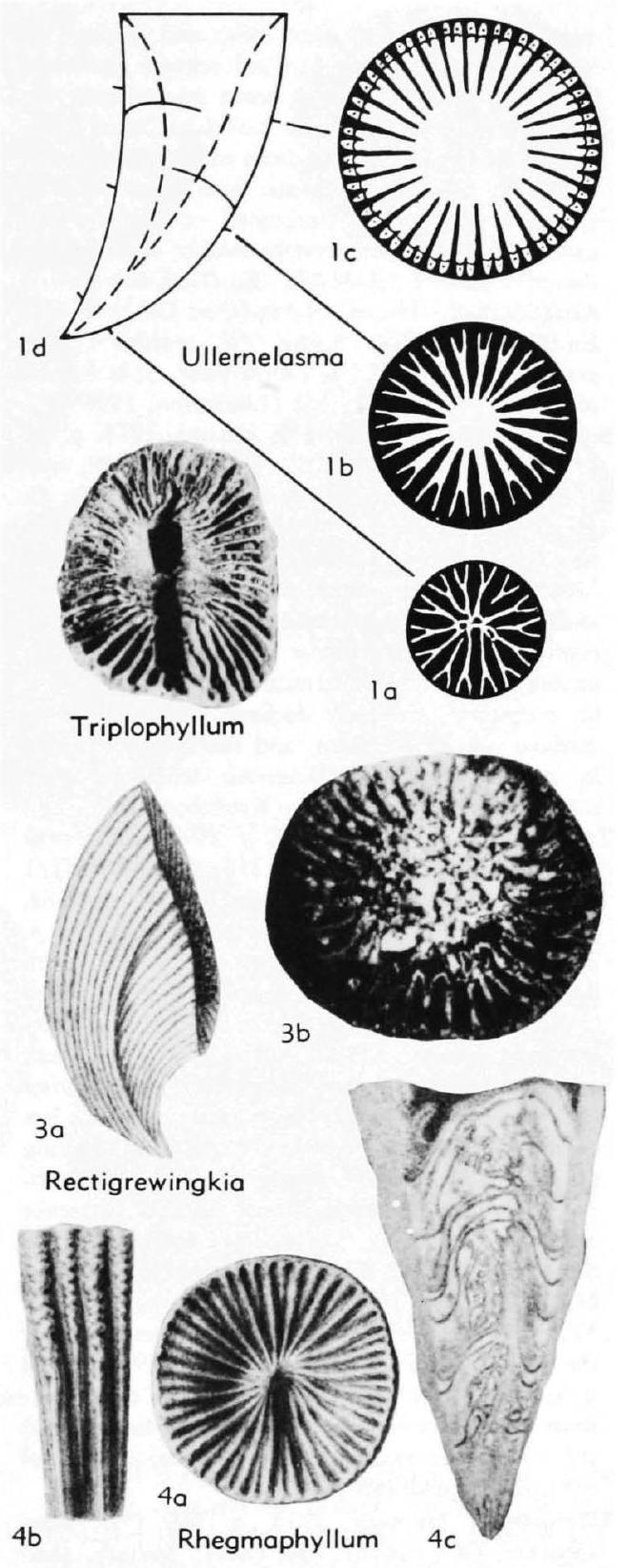 Fig. 89,2. *T. terebratum (Hall), holotype, M.Dev., Falls of the Ohio, calical view, X1 (Easton, 1944b).
Synonyms
Geographic Distribution
N.Am.(Ind.-Ky.)
Age Range
Beginning Stage in Treatise Usage:
M.Dev.(Eifel.)
Beginning International Stage:
Eifelian
Fraction Up In Beginning Stage:
0
Beginning Date:
394.3
Ending Stage in Treatise Usage:
M.Dev.(Eifel.)
Ending International Stage:
Eifelian
Fraction Up In Ending Stage:
100
Ending Date:
385.3
Description
Solitary, curved-conical, calice deep, with deep narrow fossula on concave? side, bounded by unfused adjacent metasepta and occupied by cardinal septum with distal edge lower than others, septal insertion accelerated in counter quadrants, major septa long, but in very late stages withdrawn somewhat from axis, leaving axial space floored by tabula, minor septa short, ?no dissepiments, tabular floors domed. [Presence or absence of axial septal lobes unknown. See STUMM, 1965, p. 22; EASTON, 1944b, p. 38.]
References
Simpson, G. B., 1900, Preliminary descriptions of new genera of Palaeozoic rugose corals: N.Y. State Mus., Bull., v. 8, no. 39, p. 199-222, textfig. 1-45.
Museum or Author Information
Classification
Phylum:
Cnidaria
Class:
Anthozoa
Subclass:
Rugosa
Order:
Stauriida
Suborder:
Streptelasmatina
Family:
Streptelasmatidae
Subfamily:
Streptelasmatinae
Formal Genus Name and Reference:
Triplophyllum SIMPSON, 1900, p. 209
Type Species:
Zaphrentis terebrata Hall, 1883, p. 316, OD, †3841 / 1 (=341), NYSM, Albany (original Hall, 1883, pl. 23, fig. 5), lectotype by SIMPSON, 1900, p. 209
Images
(Click to enlarge in a new window)
Fig. 89,2. *T. terebratum (Hall), holotype, M.Dev., Falls of the Ohio, calical view, X1 (Easton, 1944b).
Synonyms
Geographic Distribution
N.Am.(Ind.-Ky.)
Age Range
Beginning Stage in Treatise Usage:
M.Dev.(Eifel.)
Beginning International Stage:
Eifelian
Fraction Up In Beginning Stage:
0
Beginning Date:
394.3
Ending Stage in Treatise Usage:
M.Dev.(Eifel.)
Ending International Stage:
Eifelian
Fraction Up In Ending Stage:
100
Ending Date:
385.3
Description
Solitary, curved-conical, calice deep, with deep narrow fossula on concave? side, bounded by unfused adjacent metasepta and occupied by cardinal septum with distal edge lower than others, septal insertion accelerated in counter quadrants, major septa long, but in very late stages withdrawn somewhat from axis, leaving axial space floored by tabula, minor septa short, ?no dissepiments, tabular floors domed. [Presence or absence of axial septal lobes unknown. See STUMM, 1965, p. 22; EASTON, 1944b, p. 38.]
References
Simpson, G. B., 1900, Preliminary descriptions of new genera of Palaeozoic rugose corals: N.Y. State Mus., Bull., v. 8, no. 39, p. 199-222, textfig. 1-45.